Hold a used filter up to the window after a Broward summer and you can read a whole month of your indoor air in the grey film across the pleats. All that dust, pollen, and pet dander was headed for your lungs and your air handler before the filter stepped in front of it. Most of it stays invisible until something forces it into the light, and that is exactly why the rating printed on that cardboard frame matters more than almost any other choice you make for the air in your home.
Plenty of homeowners here go hunting for a “washable MERV 8” they can rinse and reuse for years, and I get the appeal. Before you buy one, though, it helps to know what that rating actually promises, and how the filter you pick changes the work your system does and the life of your ductwork.
TL;DR: Quick Answers
What is a MERV 8 air filter?
A MERV 8 air filter is a pleated filter rated to capture roughly 90 percent of common airborne particles down to about three microns, including dust, pollen, mold spores, and pet dander. It is the practical choice for most homes, balancing solid everyday filtration with the steady airflow your HVAC system needs.
• What it captures: dust, pollen, mold spores, lint, and pet dander, about 90 percent of everyday airborne particles down to three microns.
• Best for: standard homes and offices that want cleaner air without choking airflow. Comparable to MPR 600 and FPR 5 ratings.
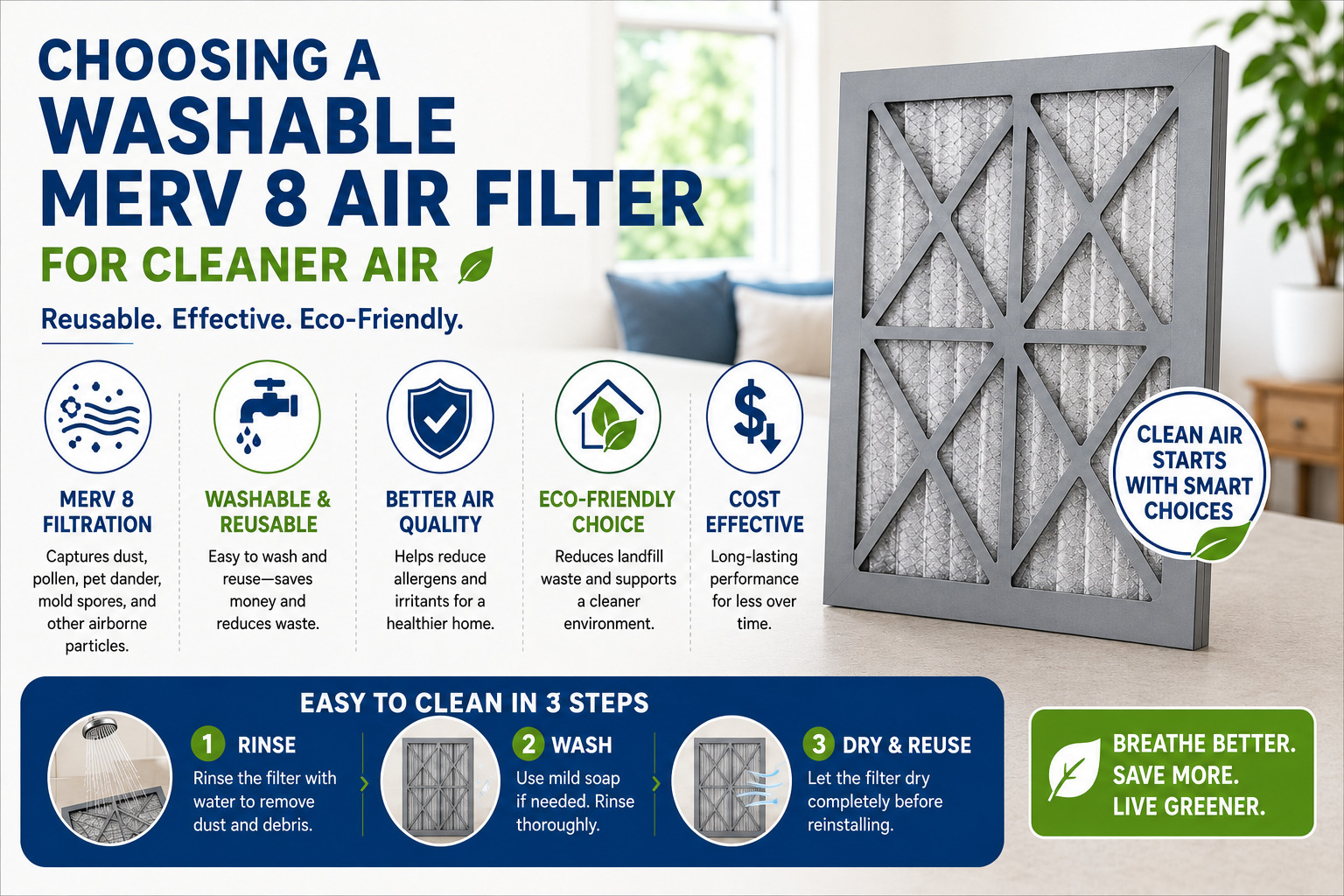
• Pleated, not washable: true MERV 8 performance comes from pleated media you replace, since washable mesh filters rank far lower.
• How often to change: every 30 to 90 days, sooner with pets, heavy dust, or a long cooling season.
Top Takeaways
• A pleated MERV 8 catches roughly 90 percent of the everyday particles drifting through a Florida home.
• “Washable MERV 8” is mostly a mismatch, since the reusable mesh filters rank well below MERV 8.
• Four-inch filters hold more surface area, so they last longer and keep airflow steady through long cooling seasons.
• Filtration and duct health are a team. A leak in a hot attic can quietly undo a good filter’s work.
• In Broward’s climate, keeping indoor humidity in check matters as much as the filter rating itself.
What MERV 8 Really Means for a South Florida Home
MERV is just the scorecard for how small a particle a filter can catch, and a MERV 8 lands in the sweet spot for a Florida house. It grabs the everyday troublemakers drifting through your rooms: dust, pollen off the live oaks and palms, mold spores, pet dander, and the fine grit that hitches a ride on humid air. I’ve swapped enough filters in and out of return vents to tell you a good MERV 8 holds onto right around 90 percent of those particles down to about three microns. That covers what most families worry about, and it does the job without strangling airflow the way a denser hospital-grade filter can.
The washable question is where I have to level with you. Most filters marketed as washable are built on a plastic or aluminum mesh, and that mesh ranks far below MERV 8. It catches the big stuff before it reaches the blower motor, then it waves the small allergens right on through to your family. For true MERV 8 performance, the filter that actually delivers it is a pleated MERV 8 air filter you replace instead of rinse. Those pleats earn their keep, because folding the media packs in more surface area, so the filter traps more while it keeps breathing easily.
Thickness is the part people skip past. A one-inch filter does the job, but a four-inch filter carries far more pleated surface, so it clogs slower and holds steady airflow much longer between changes. Picture a Broward system that barely gets a day off from May through October. That extra depth means fewer rushed trips to the hardware store and steadier humidity inside the house, which is where you actually feel it.
None of this works in isolation. A clean filter keeps dust from caking the blower and settling into your supply runs, and the way mechanical air filtration works leans on ducts that stay sealed and whole. Let a single duct split open in a 130-degree attic, and it starts pulling dirty, humid air in past the filter, so the careful choice you made at the return grille quietly loses ground. Take care of both and your air stays clean. Neglect one and the other carries the weight.
“After years of inspecting filters and duct systems in South Florida homes, I've found that even the best MERV 8 filter can only perform as well as the ductwork supporting it. When ducts leak in a hot, humid attic, they pull unfiltered air into the system, increasing dust, humidity, and strain on HVAC equipment—making proper duct repair just as important as choosing the right filter.”
7 Sources I Trust for Cleaner Indoor Air
• a plain-language guide to home air cleaners. Straight talk on how furnace and HVAC filters get rated, and what those numbers mean for you.
• How to keep a heating and cooling system efficient. The filter-change and upkeep habits that protect your comfort and your power bill at the same time.
• Simple air conditioner upkeep steps. Why a clean filter and coil keep your airflow and efficiency where they belong.
• Managing humidity in Florida homes. A Florida-specific look at keeping indoor air healthy without running up the energy bill.
• controlling the allergens that build up indoors. How to cut down dust mites, dander, and other triggers right at the source.
• What feeds dust mites in your home. A clear read on why humidity drives dust mite levels, and how to push back.
• Room-by-room tips for healthier air. Practical, space-by-space moves for cleaner air at home.
3 Statistics Worth Keeping in Mind
• About 90 percent. Most of us spend roughly 90 percent of our lives indoors, where some pollutants run two to five times higher than the air outside, according to the EPA’s indoor air quality findings.
• 27 percent. Across the hot, humid Southeast, 94 percent of households run air conditioning, and it eats up about 27 percent of the home energy bill, per federal residential energy data. That is more than double the national share.
• Ten times lower. Homes that kept indoor humidity under 51 percent carried dust mite allergen levels more than ten times lower than damp homes, according to a peer-reviewed humidity study.
Final Thoughts and Opinion
After years of pulling filters out of South Florida systems, my advice is short. For nearly every Broward home I walk into, a four-inch pleated MERV 8 is the filter that earns its spot. It catches what families actually worry about, it breathes well enough to keep the blower happy, and its depth means I’m not back at the supply vent every few weeks all summer.
I’ll give the washable filter its fair shake. Run a low-demand system in a dry, lightly used space, and a rinsable filter can handle the narrow job of keeping big debris off the equipment. For the humid, hard-running reality of Broward County, I’d rather change a pleated filter on a schedule and know exactly what my air is moving through. That small recurring cost buys cleaner air and a system that holds up better year after year.
Frequently Asked Questions
Is there really a washable MERV 8 filter?
Not in any honest sense. Most filters sold as washable use a low-rated mesh that sits well below MERV 8, so they guard the equipment more than they clean your air. For true MERV 8 capture, reach for a pleated filter you replace on a schedule.
Is MERV 8 good for allergies and dust?
For everyday dust, pollen, and pet dander, yes. A MERV 8 catches most of the common particles that bother people in a Florida home without straining the blower. If allergies run severe, some folks step up to MERV 11 or 13, as long as their system can handle the denser media.
How often should I change a MERV 8 filter in Florida?
Our systems barely rest down here, so I check a one-inch filter every month and usually swap it every 30 to 60 days. A four-inch filter often stretches to three or even six months. Pets, heavy dust, and a hard-running summer all shorten that window.
What is the difference between a one-inch and a four-inch MERV 8?
The four-inch packs far more pleated surface, so it captures more before it clogs and holds airflow steady longer. In a high-runtime climate, that usually means fewer filter changes and better humidity control.
Can a dirty filter actually damage my ducts and system?
It can. A clogged filter starves the system of air, which strains the blower and lets dust slip past to coat the coil and the inside of your ducts. Pair regular filter changes with sealed, intact ducts, and both will last longer.
Put Filtration and Duct Repair to Work Together
In a Broward home, the right four-inch pleated MERV 8 filter and timely duct repair work as a team, and together they decide how clean and steady the air in your house really feels. Upgrade to the filter that fits your system and have your ductwork checked, and you put both halves of that team to work for your family.
Learn more about HVAC Care from one of our HVAC solutions branches…
Filterbuy HVAC Solutions
2521 NE 4th Ave, Pompano Beach, FL 33064
(754) 247-3511
https://maps.app.goo.gl/JmWkEXya7uzuLzBh8